Let's Talk About the Great Barrier Reef
This past weekend I had the opportunity of a lifetime getting to not only snorkel, but scuba dive at the Great Barrier Reef. It was absolutely amazing on all accounts but it also made me sad. The Great Barrier Reef is dying.
This was a super spontaneous trip. I got a notification Thursday night that flights to Cairns had dropped in price astronomically just for the weekend and I immediately started looking at options. I found a cheap hostel for two nights and bought the flights. Leaving Saturday afternoon, spending all of Sunday on a boat, and coming back early Monday morning to get back before my lectures in the afternoon, it was the quickest of quick trips.
On Saturday night, after a delayed flight due to a thunderstorm all I wanted to do was get in bed and go to sleep considering I had to be up and out at 7:15 the next morning. Unfortunately for me, I did absolutely no research on the hostel I booked. I picked the least expensive option that looked not gross and that happened to be Gilligan's. For anyone who knows about Gilligan's, they have a reputation. Gilligan's is a party hostel attached to a night club also owned by the accommodation. I just happened to stay on the second floor, right. above. the club. When I tell you it was so loud....that is the under statement of the century. The metal bunked bedframes were rattling with every beat of the base. I had my noise canceling headphones on, a pillow and sweatshirt over my head, and I could still hear every single word coming from downstairs until about 3 in the morning.
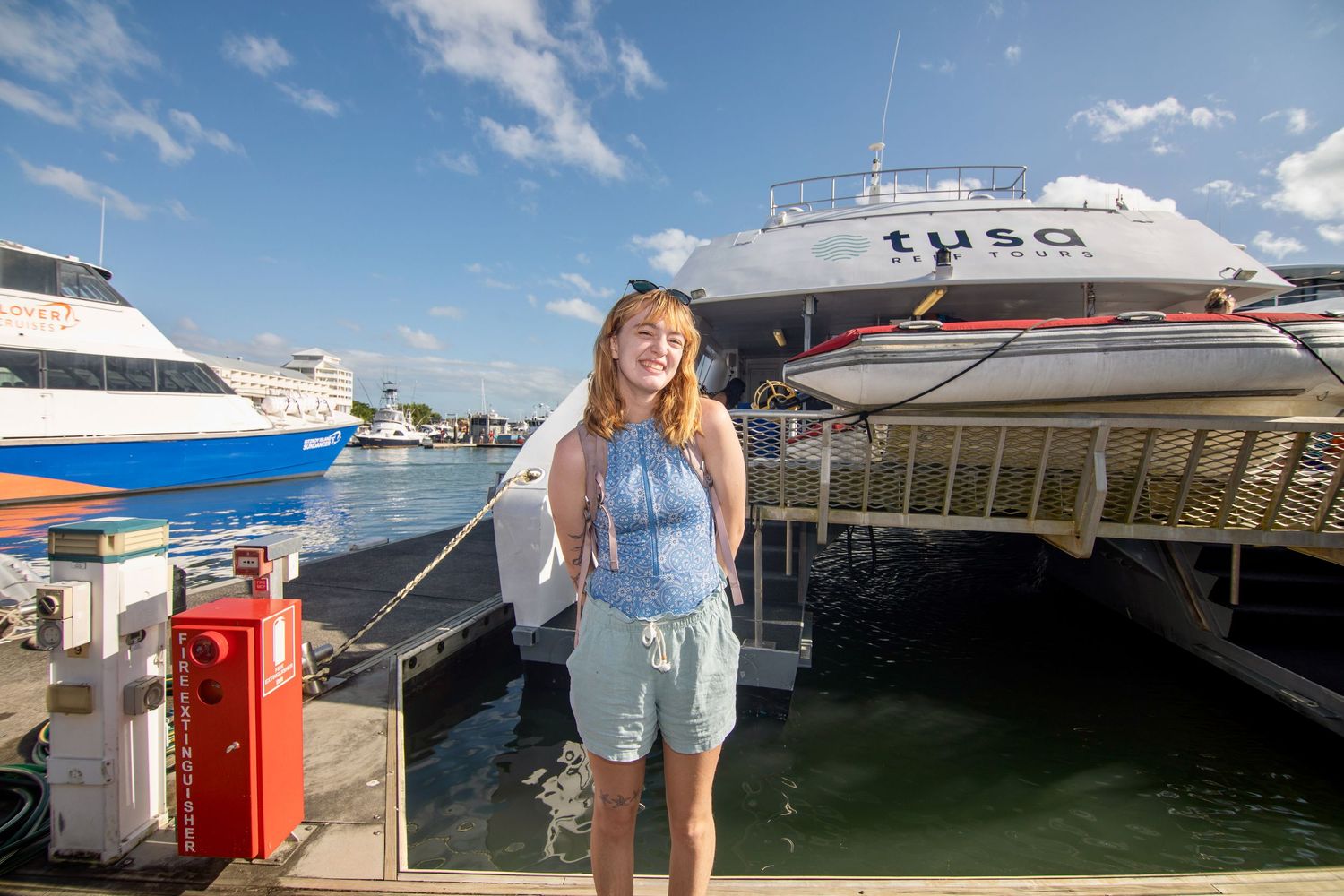
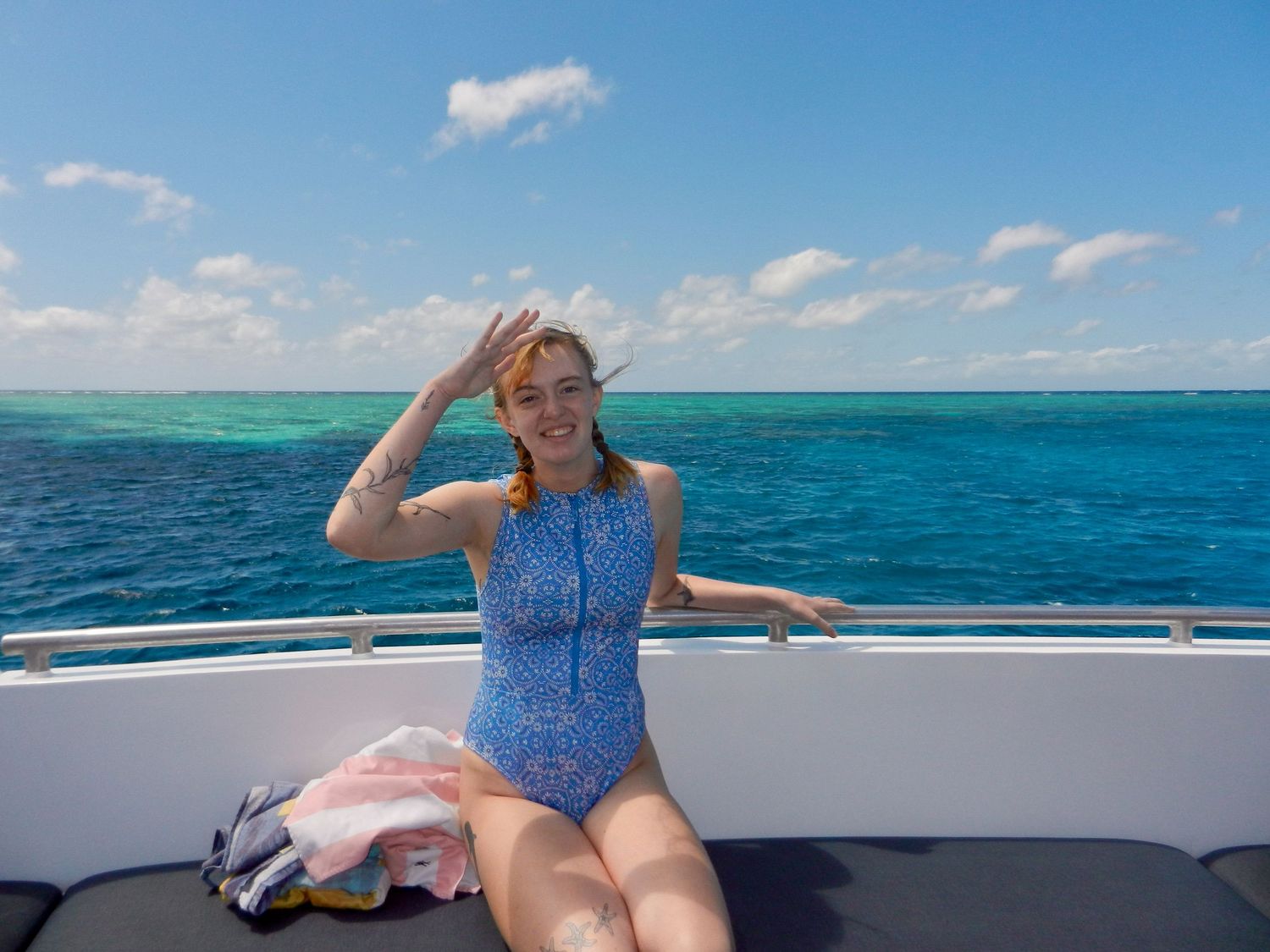
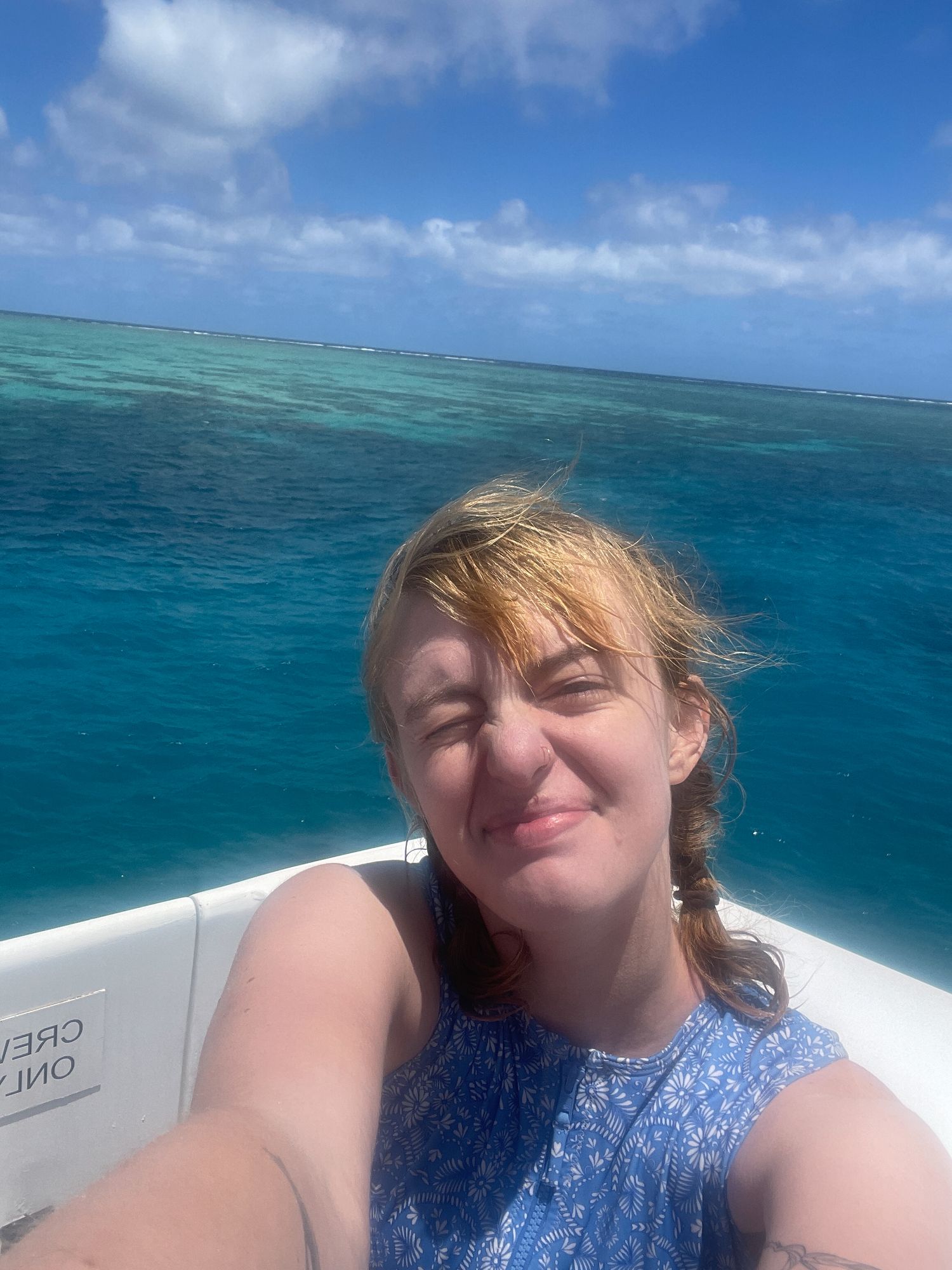
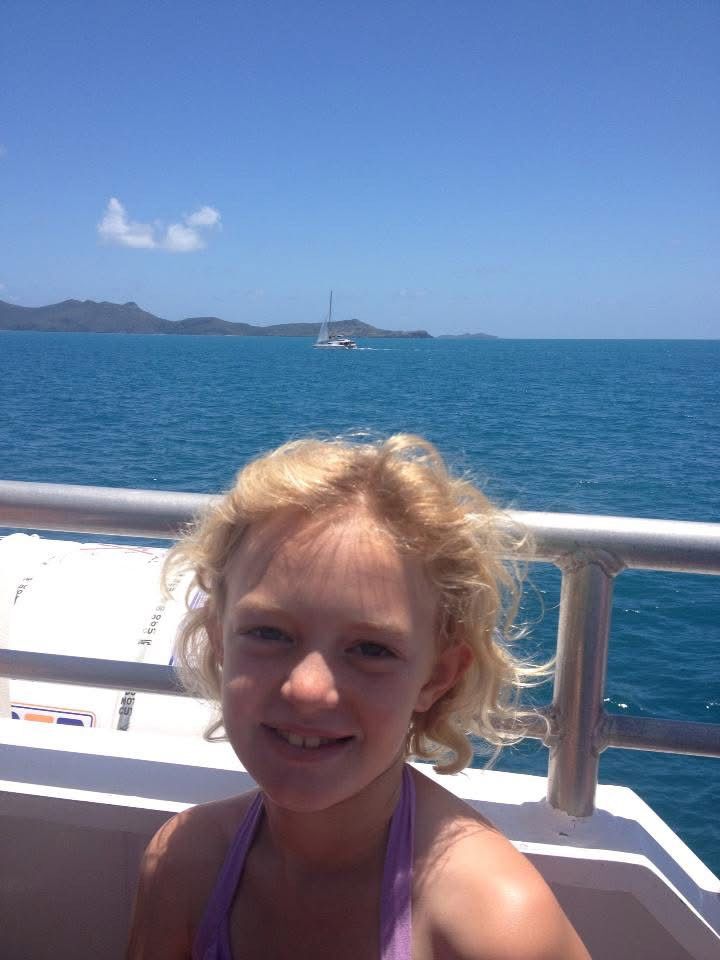
The next morning we were up bright and early to get out to the reef because it is quite the trek out there. A choppy boat ride and 1.5 hours later we made it to the reef and MY GOD was it beautiful. The water was this incredible turquoise blue and you could see all the reef clusters without even being in the water. It was amazing to say the least.
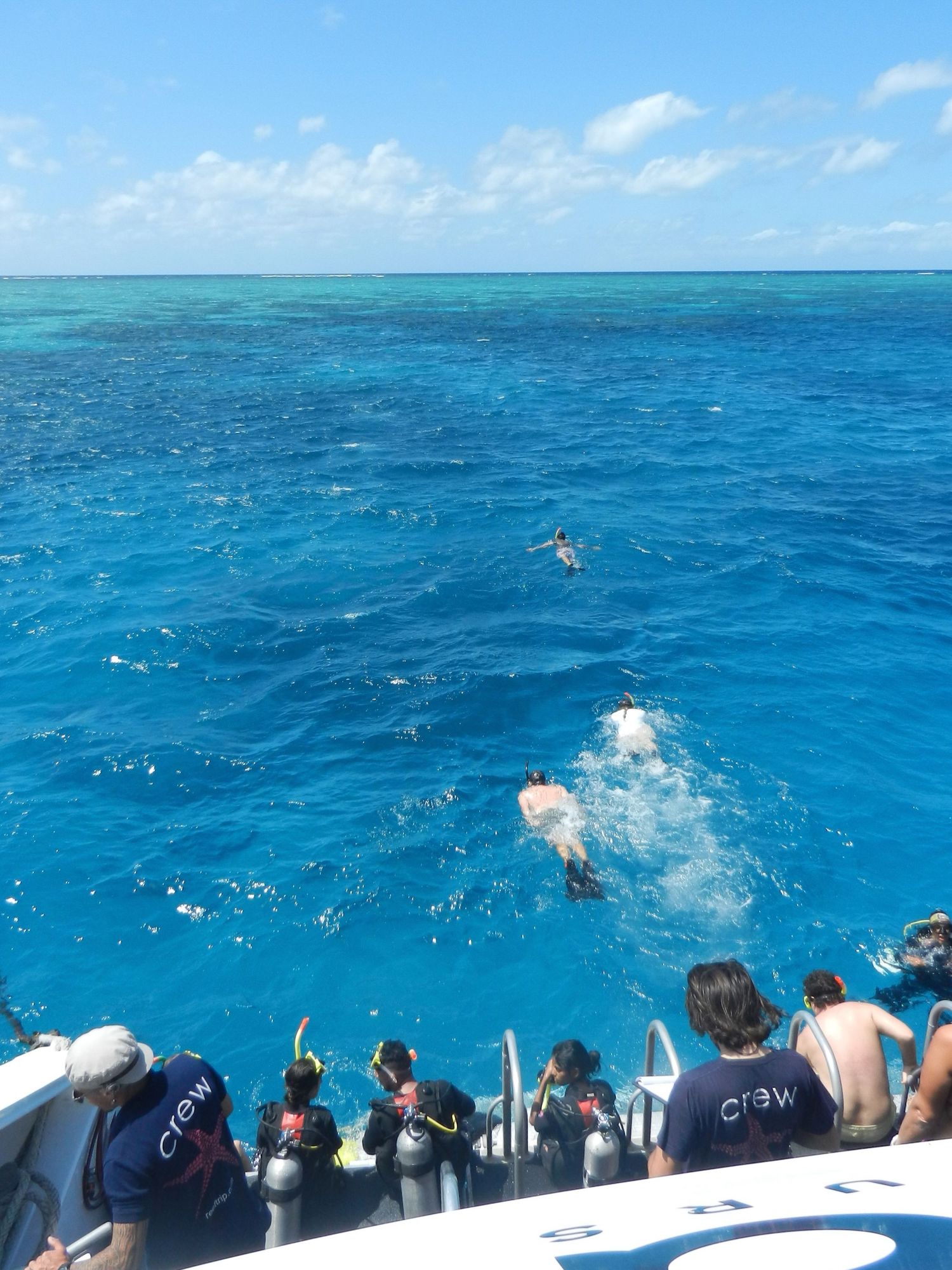
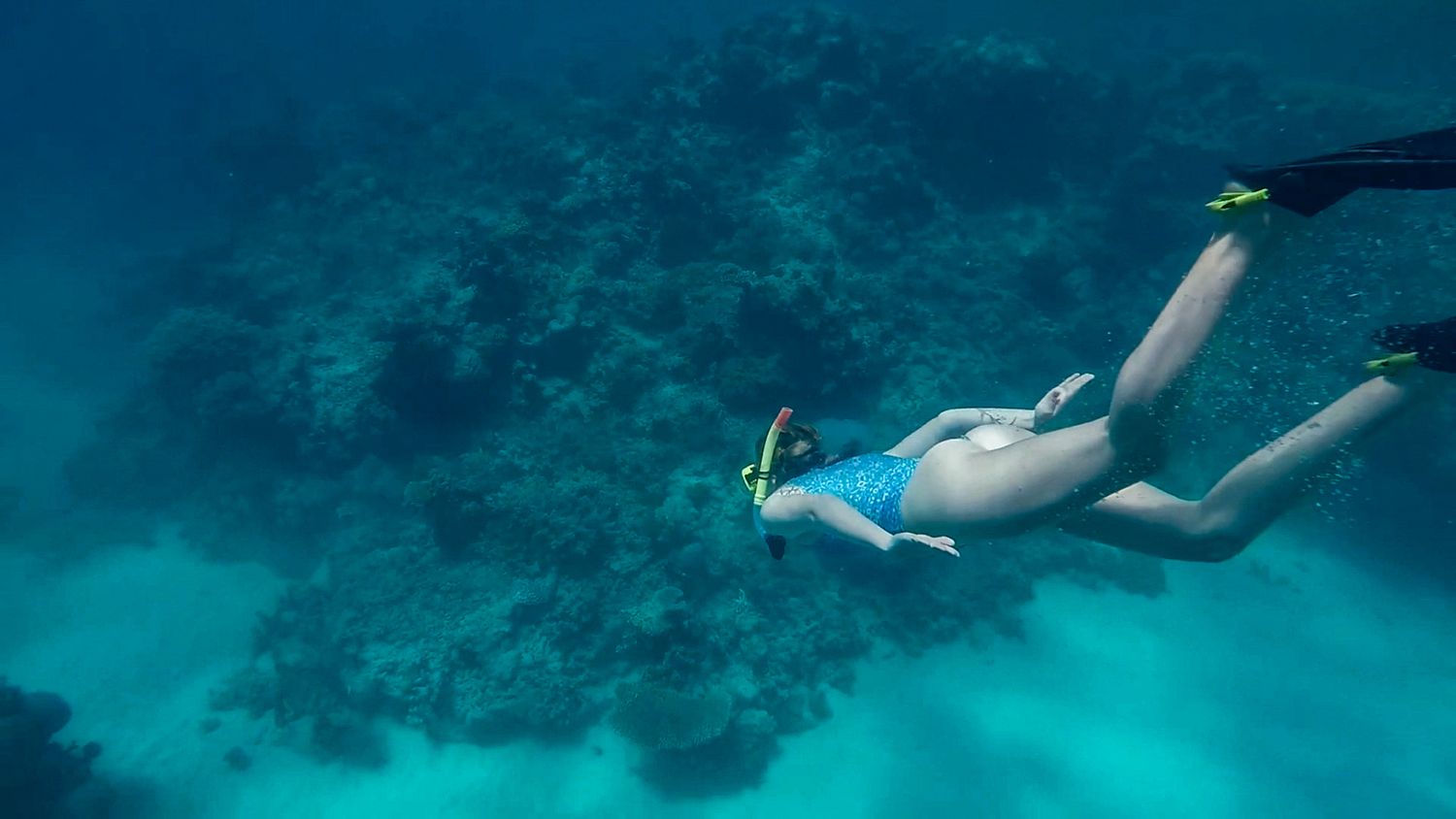
Not only was it beautiful but I got to do something I had never done before, scuba diving. I'm not going to lie I was nervous. I am not the biggest snorkeling fan as is, and I know there are a ton of risks that come with diving but if there was anywhere to do it, its the Great Barrier Reef.
It was one of the most incredible things I have ever experienced. We did not go down very far because this was an intro of intro dives but you really got to get up close and personal with the reef and all of it's inhabitants.
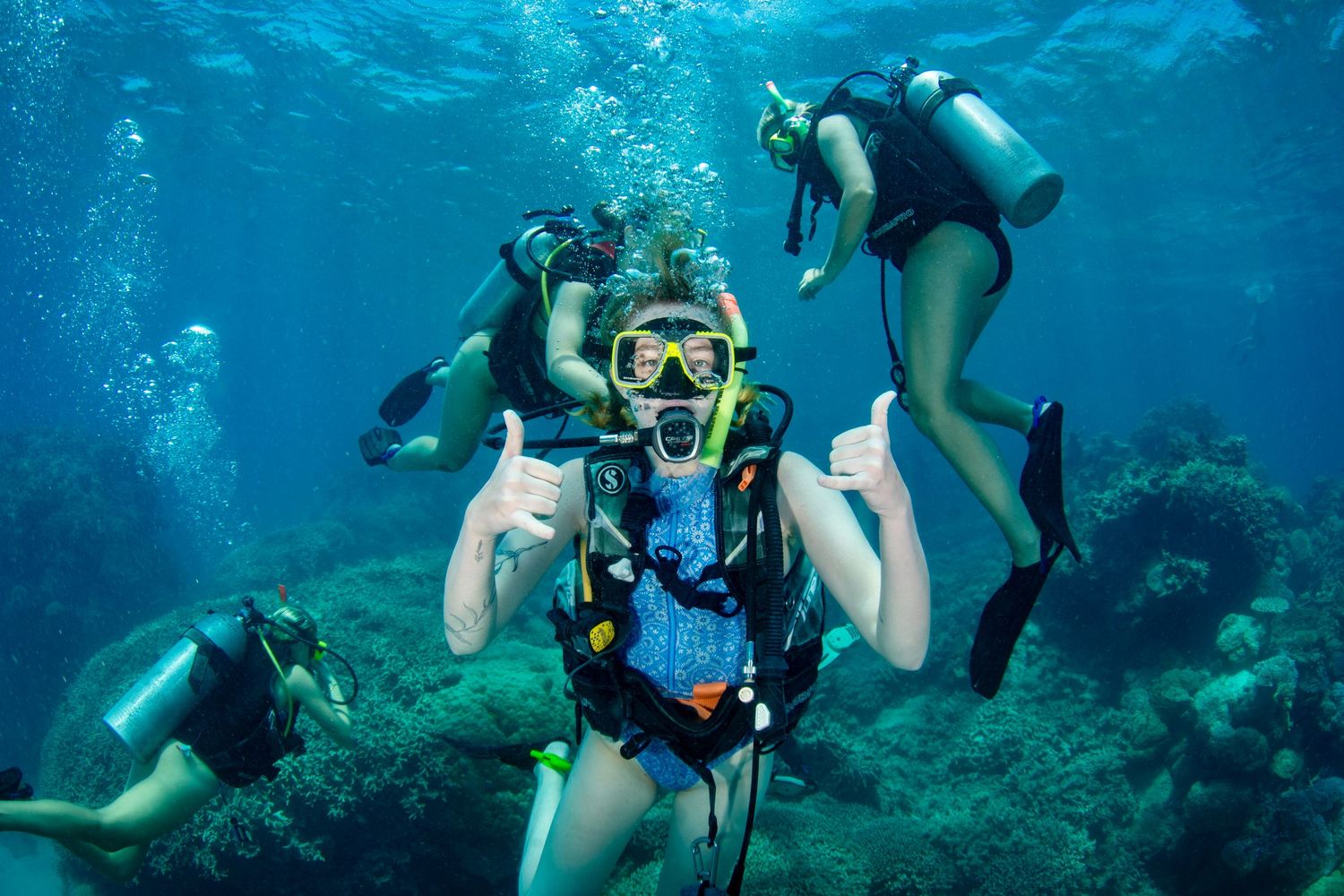
That being said, while it was an amazing, bucket list experience to dive on the most iconic reef in the world, it also made me sad. The reef is dying and as someone who has spent the last semester studying stressors on the marine ecosystem specifically in this region, seeing it in real life made my heart ache.
10 years ago I was able to come out the the Great Barrier Reef with my family on a vacation but a lot has changed since then.
What I remember from our trip 10 years ago was an abundance of fish everywhere you look. And the colors, oh I remember the colors and how beautiful it was. While the first color of light you lose underwater is red, making most things look yellow, green black, or blue, white is something you never want to see. That means the coral is dead and unfortunately at the reef, there was way too much. Another shocker was the true lack of fish. Between snorkeling and diving, I could count on both hands how many fish were present at the reef cluster we visited and unfortunately that is one of the biggest signs of an unhealthy ecosystem.
In the last 10 years the reef has suffered repeated, large scale beaching events due to oceanic heatwaves and consistent anthropogenic warming. Recent monitoring shows some of the largest annual coral cover decline on record and because of the back-to back bleaching episodes in 2016, 2017, 2020, 2023-2024, there is less time for ecological recovery between events.
Studies also show a shift towards smaller colony sizes and reduced abundance of large, structurally important corals which results in a loss of reef complexity and reduces habitat value as well as resilience to environmental threats even when a substantial percent of coral cover remains. It was first documented after the 2016-2017 bleaching event and has only grown since.
As I mentioned before, The scientific consensus is stronger marine heatwaves driven by anthropogenic warming are the primary driver of recent mass mortality events, with cyclones and crown-of-thorns starfish (COTS) outbreaks continuing to exacerbate losses regionally. Local management (water quality, COTS control) can help, but alone will not stop heatwave driven losses. Recurrent severe heat stress has reduced recovery windows and shifted projections toward substantially lower coral dominance unless global warming is urgently curtailed. Modeling studies show large-scale interventions may delay declines but only cutting greenhouse gas emissions prevents near-term loss of coral-dominated states.
If this much damage can occur to a nationally and internationally protected site declared one of the 7 natural wonders of the world what does that mean for the rest of the earth? Our oceans need immediate, affective attention and that starts with reducing carbon emissions contributing to global climate change.
There is still hope. Many organizations worldwide are dedicated to restoring the reef and the health of our oceans in small and large ways. With 25% of all oceanic species calling reefs home (like a sweet green sea turtle recently taken off the endangered species list), there is no time like the present to learn about reef and oceanic destruction and what we can do to help.
If you are interested in diving deeper into coral bleaching, ocean acidification and long term coral colony shifts I have listed all of my research sources i used while writing this post below!
Large Scale Interventions May Delay Decline of the Great Barrier Reef by Scott A. Condie, Kenneth R. N. Anthony, Russ C. Babcock, Mark E. Baird, Roger Beeden, Cameron S. Fletcher, Rebecca Gorton, Daniel Harrison, Alistair J. Hobday, Éva E. Plagányi and David A. Westcott
The Great Barrier Reef: Vulnerabilities and Solutions in the Face of Ocean Acidification by Linwood Pendleton, Ove Hoegh-Guldberg, Rebecca Albright, Anne Kaup, Paul Marshall, Nadine Marshall, Steve Fletcher, Gunnar Haraldsson, Lina Hansson
Long-term shifts in the Colony Size Structure of Coral Populations Along the Great Barrier Reef by Andreas Dietzel, Michael Bode, Sean R. Connolly and Terry P. Hughes
Global warming and recurrent mass bleaching of corals by Terry P. Hughes, James T. Kerry, Mariana Álvarez-Noriega, Jorge G. Álvarez-Romero, Kristen D. Anderson, Andrew H. Baird, Russell C. Babcock, Maria Beger, David R. Bellwood, Ray Berkelmans, Tom C. Bridge, Ian R. Butler, Maria Byrne, Neal E. Cantin, Steeve Comeau, Sean R. Connolly, Graeme S. Cumming, Steven J. Dalton, Guillermo Diaz-Pulido, C. Mark Eakin, Will F. Figueira, James P. Gilmour, Hugo B. Harrison, Scott F. Heron, …Shaun K. Wilson
Great Barrier Reef Foundation Website